Hair brushing is a common practice that helps remove tangles, distribute natural oils, and promote hair growth. However, excessive brushing can damage hair and lead to breakage, split ends, and hair loss. Over brushing can also irritate the scalp and cause inflammation.
The frequency of brushing depends on hair type and texture. Fine hair is more prone to damage from over brushing, so it should be brushed less often than thick, coarse hair. Curly hair also requires less brushing, as excessive brushing can disrupt the natural curl pattern and cause frizz.
When brushing your hair, it is important to use a brush with soft bristles and to brush gently. Avoid brushing your hair when it is wet, as this can weaken the hair and make it more susceptible to breakage. If your hair is tangled, use a detangling spray or conditioner to help loosen the knots before brushing.
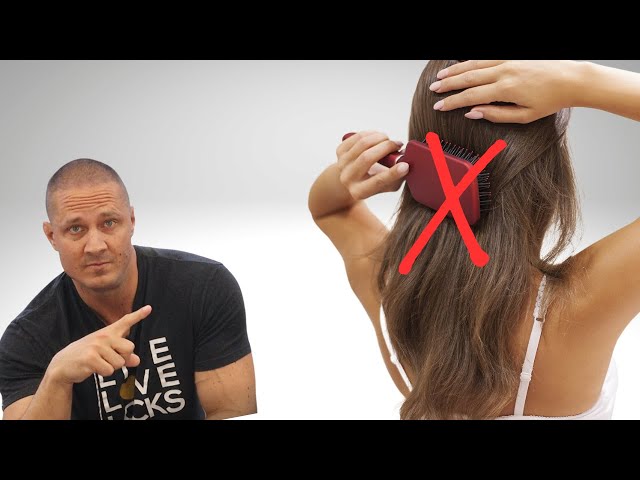
over brushing hair
Over brushing hair is a common problem that can lead to a number of hair problems, including breakage, split ends, and hair loss. It can also irritate the scalp and cause inflammation.
- Damage: Over brushing can damage the hair shaft, leading to breakage and split ends.
- Breakage: Over brushing can weaken the hair, making it more susceptible to breakage.
- Split ends: Over brushing can split the ends of the hair, making it look dry and unhealthy.
- Hair loss: Over brushing can cause hair loss by damaging the hair follicles.
- Scalp irritation: Over brushing can irritate the scalp, causing redness and inflammation.
- Frizz: Over brushing can cause frizz by disrupting the hair's natural curl pattern.
In addition to these key aspects, over brushing hair can also lead to other problems, such as tangles and knots. It can also make the hair look dull and lifeless. If you are experiencing any of these problems, it is important to reduce the amount of time you spend brushing your hair.
Damage
Over brushing hair can damage the hair shaft, leading to breakage and split ends. This is because when you brush your hair, you are essentially scraping the cuticle, which is the outermost layer of the hair. This can cause the cuticle to become damaged and lifted, which makes the hair more susceptible to breakage and split ends.
In addition, over brushing can also cause the hair to become dry and brittle. This is because brushing can strip the hair of its natural oils, which are essential for keeping the hair healthy and hydrated. When the hair is dry and brittle, it is more likely to break and split.
If you are experiencing breakage and split ends, it is important to reduce the amount of time you spend brushing your hair. You should also use a brush with soft bristles and avoid brushing your hair when it is wet. Wet hair is more fragile and susceptible to damage.
Breakage
Over brushing hair can weaken the hair, making it more susceptible to breakage. This is because the friction from brushing can damage the hair shaft and cause it to become thin and weak. In addition, over brushing can also strip the hair of its natural oils, which are essential for keeping the hair healthy and strong. When the hair is dry and brittle, it is more likely to break.
Breakage is a common problem for people who over brush their hair. It can also be a problem for people who have certain types of hair, such as fine hair or hair that is damaged from chemical treatments. If you are experiencing breakage, it is important to reduce the amount of time you spend brushing your hair. You should also use a brush with soft bristles and avoid brushing your hair when it is wet. Wet hair is more fragile and susceptible to damage.
By understanding the connection between over brushing hair and breakage, you can take steps to protect your hair and keep it healthy.
Split ends
Split ends are a common problem that can affect people of all ages and hair types. They occur when the ends of the hair become dry and brittle, causing them to split into two or more strands. This can make the hair look dry, unhealthy, and difficult to style.
- Over brushing: Over brushing is one of the most common causes of split ends. When you brush your hair, the friction from the brush can damage the hair shaft and cause it to become dry and brittle. This can lead to split ends, especially if you brush your hair frequently or use a brush with hard bristles.
- Chemical treatments: Chemical treatments, such as perming, coloring, and straightening, can also damage the hair shaft and make it more susceptible to split ends. This is because these treatments can strip the hair of its natural oils, which are essential for keeping the hair healthy and hydrated.
- Heat styling: Heat styling tools, such as blow dryers, flat irons, and curling irons, can also damage the hair shaft and cause split ends. This is because heat can dry out the hair and make it more brittle.
- Environmental factors: Environmental factors, such as sun exposure, wind, and pollution, can also damage the hair shaft and cause split ends. This is because these factors can strip the hair of its natural oils and make it more susceptible to damage.
Split ends can be prevented by taking care of your hair and avoiding the factors that can cause them. This includes brushing your hair gently with a soft-bristled brush, avoiding chemical treatments and heat styling, and protecting your hair from the elements.
Hair loss
Over brushing hair can cause hair loss by damaging the hair follicles. The hair follicle is a small, tube-shaped structure in the skin that produces hair. When you over brush your hair, you can damage the hair follicle, which can lead to hair loss.
There are a few different ways that over brushing can damage the hair follicle. First, over brushing can cause the hair follicle to become inflamed. This inflammation can damage the hair follicle and make it difficult for hair to grow. Second, over brushing can also cause the hair follicle to become clogged. This can prevent hair from growing out of the follicle. Third, over brushing can also cause the hair follicle to become damaged. This can make it difficult for hair to grow out of the follicle and can also lead to hair loss.
If you are experiencing hair loss, it is important to see a doctor to rule out any underlying medical conditions. Once any underlying medical conditions have been ruled out, you can start to address the problem of over brushing. To do this, you should reduce the amount of time you spend brushing your hair. You should also use a brush with soft bristles and avoid brushing your hair when it is wet. Wet hair is more fragile and susceptible to damage.
By understanding the connection between over brushing hair and hair loss, you can take steps to protect your hair and keep it healthy.
Scalp irritation
Over brushing hair can irritate the scalp, causing redness and inflammation. This is because the friction from brushing can damage the scalp's natural protective barrier, allowing bacteria and other irritants to enter the skin. In addition, over brushing can also strip the scalp of its natural oils, which are essential for keeping the scalp healthy and hydrated. When the scalp is dry and irritated, it is more likely to become inflamed.
Scalp irritation is a common problem for people who over brush their hair. It can also be a problem for people who have certain types of hair, such as dry hair or hair that is damaged from chemical treatments. If you are experiencing scalp irritation, it is important to reduce the amount of time you spend brushing your hair. You should also use a brush with soft bristles and avoid brushing your hair when it is wet. Wet hair is more fragile and susceptible to damage.
By understanding the connection between over brushing hair and scalp irritation, you can take steps to protect your scalp and keep it healthy.
Frizz
Over brushing hair can cause frizz by disrupting the hair's natural curl pattern. This is because when you brush your hair, you are essentially separating the individual hair strands. This can cause the hair to become frizzy and unmanageable.
In addition, over brushing can also strip the hair of its natural oils. These oils are essential for keeping the hair healthy and hydrated. When the hair is dry and brittle, it is more likely to become frizzy.
If you have frizzy hair, it is important to reduce the amount of time you spend brushing your hair. You should also use a brush with soft bristles and avoid brushing your hair when it is wet. Wet hair is more fragile and susceptible to damage.
By understanding the connection between over brushing hair and frizz, you can take steps to protect your hair and keep it healthy.
FAQs on "over brushing hair"
Over brushing hair is a common problem that can lead to a number of hair problems, including breakage, split ends, hair loss, scalp irritation, and frizz. To avoid these problems, it is important to brush your hair gently with a soft-bristled brush and to avoid brushing your hair when it is wet.
Question 1: How often should I brush my hair?
The frequency of brushing depends on your hair type and texture. Fine hair is more prone to damage from over brushing, so it should be brushed less often than thick, coarse hair. Curly hair also requires less brushing, as excessive brushing can disrupt the natural curl pattern and cause frizz.
Question 2: What type of brush should I use?
When brushing your hair, it is important to use a brush with soft bristles. Hard bristles can damage the hair shaft and cause breakage.
Question 3: Should I brush my hair when it is wet?
No, you should not brush your hair when it is wet. Wet hair is more fragile and susceptible to damage.
Question 4: What are the signs of over brushing?
The signs of over brushing include breakage, split ends, hair loss, scalp irritation, and frizz.
Question 5: What can I do if I have over brushed my hair?
If you have over brushed your hair, it is important to reduce the amount of time you spend brushing your hair. You should also use a brush with soft bristles and avoid brushing your hair when it is wet.
Question 6: How can I prevent over brushing?
To prevent over brushing, it is important to brush your hair gently with a soft-bristled brush and to avoid brushing your hair when it is wet.
By following these tips, you can avoid the problems associated with over brushing hair and keep your hair healthy and looking its best.
Tips for Avoiding Over Brushing Hair
Over brushing hair is a common problem that can lead to a number of hair problems, including breakage, split ends, hair loss, scalp irritation, and frizz. To avoid these problems, it is important to follow these tips:
Tip 1: Brush your hair gently.
When brushing your hair, be gentle and avoid using too much force. This will help to prevent damage to the hair shaft and scalp.
Tip 2: Use a brush with soft bristles.
Hard bristles can damage the hair shaft and cause breakage. Choose a brush with soft bristles that will be gentle on your hair.
Tip 3: Avoid brushing your hair when it is wet.
Wet hair is more fragile and susceptible to damage. Allow your hair to dry completely before brushing it.
Tip 4: Brush your hair less often.
The frequency of brushing depends on your hair type and texture. However, it is generally best to brush your hair no more than once or twice a day.
Tip 5: Use a detangling spray or conditioner.
If your hair is tangled, use a detangling spray or conditioner to help loosen the knots before brushing. This will help to prevent breakage.
Tip 6: Get regular trims.
Regular trims will help to remove split ends and prevent further damage to your hair.
By following these tips, you can avoid the problems associated with over brushing hair and keep your hair healthy and looking its best.
Summary of key takeaways or benefits:
- Gentle brushing with soft bristles prevents hair damage.
- Avoiding wet hair brushing reduces breakage susceptibility.
- Limiting brushing frequency minimizes hair stress.
- Detangling products and regular trims maintain hair health.
Transition to the article's conclusion:
Over brushing hair is a common problem that can be easily avoided by following these simple tips. By taking care of your hair, you can keep it healthy and looking its best for years to come.
Conclusion on Over Brushing Hair
Over brushing hair is a common problem that can lead to a number of hair problems, including breakage, split ends, hair loss, scalp irritation, and frizz. To avoid these problems, it is important to brush your hair gently with a soft-bristled brush and to avoid brushing your hair when it is wet. By following these simple tips, you can keep your hair healthy and looking its best.
Taking care of your hair is important for your overall health and well-being. Healthy hair is a sign of good health and vitality. When your hair is healthy, you feel more confident and attractive. Brushing your hair gently and regularly is one of the best ways to keep your hair healthy and looking its best.
Youtube Video:


No comments:
Post a Comment